The Science of Car Crashes

Caroll Alvarado
| 08-06-2026

Hi, Friends! If you've ever watched a fender-bender happen in slow motion and thought, "How did that even occur?" you're not alone.
Car crashes might look like pure bad luck, but underneath all that twisted metal and scattered debris, there's a whole universe of science quietly running the show.
Think of it like a recipe gone wrong. The ingredients were all there, the conditions lined up, and boom, disaster on four wheels.
Physics Is Always in the Driver's Seat
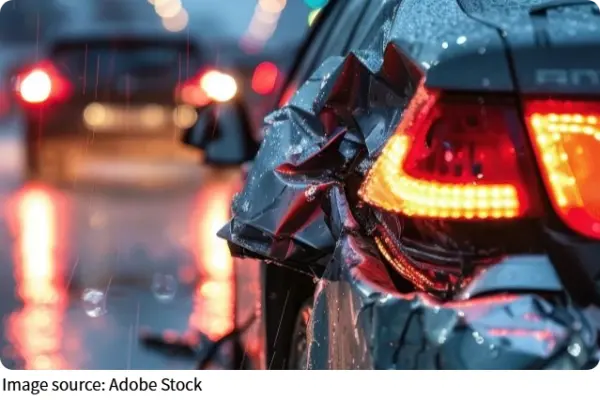
Let's start with the basics. Every time a vehicle moves, it's basically a physics experiment on wheels. When a crash happens, it's Newton's laws having a field day. A moving car carries kinetic energy.
The faster it goes, the more energy it has. When it suddenly stops (say, by meeting another car or a concrete barrier), that energy has to go somewhere. It doesn't just vanish. It transfers into crushing the vehicle, throwing passengers forward, and generating that terrifying crunch you hear from a block away.
Practical packing tips to stay comfortable, organized, and prepared on long rides
How to Ride Safely Through Intersections: A Complete Guide for Motorcyclists
What to Do When a Tire Blows or the Road Suddenly Stops — Before It Happens to You
That Weird Sound Your Bike Just Started Making? Here's Exactly What Your Engine Is Trying to Tell You
The air pressure in your tires affects your safety, your fuel bill, and how long the tires last. Most drivers ignore it.
Tires, suspension lifts and roof racks are the core upgrades that actually change what your off-road vehicle can do
Speed is the biggest villain here. Double your speed, and you quadruple the kinetic energy. That's not a typo. Going from 30 mph to 60 mph doesn't just double the danger; it multiplies it by four. This is why speed limits exist and why ignoring them is basically volunteering for a physics lesson you did not sign up for.
Human Error: The Surprisingly Common Culprit
Research consistently shows that human behavior is behind the vast majority of crashes. Distracted driving is now one of the leading causes globally. And we're not just talking about texting. Eating, adjusting the radio, daydreaming about your weekend plans, all of it pulls your brain off the road at exactly the wrong moment.
Fatigue is another sneaky one. A drowsy driver has reaction times similar to someone who is severely impaired. Your brain starts making micro-decisions poorly, your eyes take longer to process what they see, and before you know it, your reaction time has stretched from a sharp half-second to a sluggish two seconds. In highway driving, two seconds is an eternity.
Then there's aggressive driving. Tailgating, sudden lane changes, running yellows. These behaviors reduce the "safety buffer" between cars to basically nothing, leaving zero room for the unexpected.
Road Design and Environmental Factors
Not everything is the driver's fault. Road design plays a massive role in crash frequency and severity. Poorly lit intersections, missing guardrails, confusing signage, and sharp curves without adequate warning signs are all crash contributors that don't get nearly enough blame.
Wet roads are particularly tricky. Water reduces tire friction dramatically, turning your confident highway lane into something closer to an ice rink. Hydroplaning, where your tires actually lift off the surface and ride on a thin film of water, can happen at speeds as low as 35 mph on worn tires. The fix? Slow down in the rain, check your tire tread regularly, and don't pretend your car is immune to physics just because it has traction control.
How Vehicle Design Saves Lives
Modern cars are actually engineering marvels designed specifically to lose gracefully. Crumple zones are built into the front and rear of vehicles to absorb crash energy before it reaches the passengers. Airbags deploy in milliseconds to cushion the body from that kinetic energy we talked about earlier. Seatbelts distribute force across your stronger skeletal areas rather than letting your face meet the steering wheel.
Studies have shown that seatbelt use alone reduces fatality risk by about 45% in passenger cars. That little click is doing a LOT of heavy lifting for your survival odds.
Prevention Strategies That Actually Work
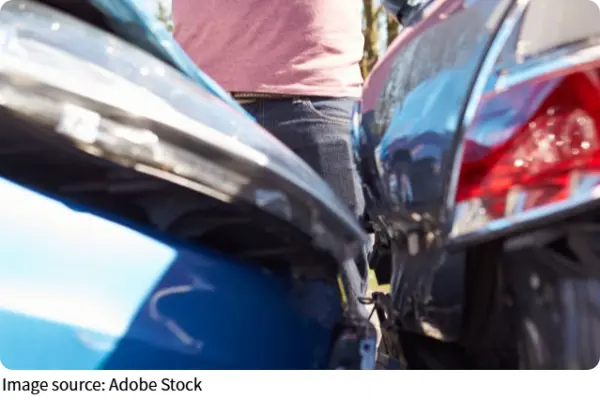
So what can you actually do? First, keep your speed reasonable and adjust for conditions. Second, eliminate distractions. Put the phone in the back seat if you have to. Third, maintain a safe following distance; the two-second rule is a minimum, not a suggestion.
Fourth, get your tires and brakes checked regularly because a car that can't stop is basically a guided disaster. Fifth, never push through fatigue on a long drive; a 20-minute nap at a rest stop could be the most important decision of your trip.
Car crashes are not inevitable. They follow patterns, they follow physics, and they follow human behavior. The more we understand science, the better equipped we are to break that pattern before it breaks us.